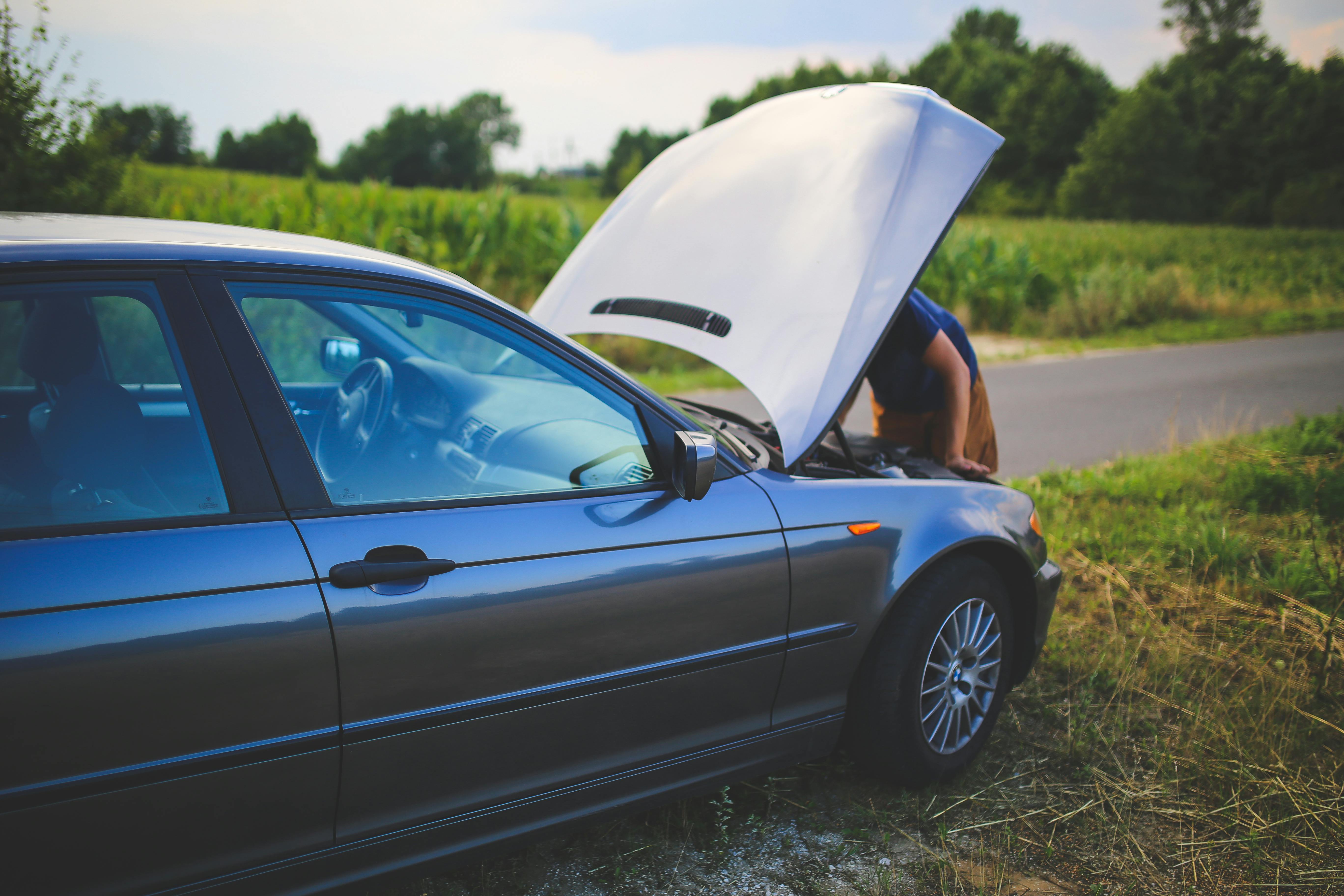
Breaking down on the highway is one of those situations where the wrong move can turn a bad day into a dangerous one. The good news: there's a clear sequence of things to do, and knowing it ahead of time makes a real difference.
Get Off the Roadway — As Far As Possible
The moment you feel something is wrong, signal and move right. Don't wait to confirm what's happening. Get to the shoulder, then keep going if you can — past the white line, past the rumble strips, as far onto the shoulder as possible. The further you are from live traffic, the safer you are. If you can make it to an exit, do that instead.
Once stopped, turn on your hazard lights immediately. If you have road flares or a reflective triangle, set them out behind the vehicle (at least 100 feet back) once traffic is clear.
Stay in the Car
This is counterintuitive but important: stay in the car with your seatbelt on. Standing outside a disabled vehicle on a highway shoulder is one of the most dangerous places you can be. Distracted drivers have struck both vehicles and people standing next to them. Unless the car is on fire or there's smoke, stay inside.
If you must get out — say, you're on a bridge or a dangerous curve — get out on the passenger side, away from traffic, and move well away from the road.
Call Roadside Assistance First
Before you call anyone, call roadside assistance. AAA, your insurance provider, your credit card, or your automaker's app — most people have at least one of these and forget they do. This matters because whoever calls the tow truck controls where it goes.
If a tow truck shows up without you calling one, be cautious. Predatory towers — called "bandit towers" — scan police radio channels and show up uninvited. They charge inflated rates, demand cash, and may hold your car until you pay.
"The tow company you call is the tow company you negotiate with. Never let a stranger make that decision for you."
You Have Rights on Tow Destination
In most states, you have the legal right to choose where your car gets towed — even if police are involved. Some states require towers to inform you of your rights. If a tow truck driver is pressuring you to go to a specific shop, you don't have to agree.
A few things to nail down before the car moves:
- Get the tow rate in writing before they hook up
- Confirm the destination address
- Make sure you have your personal belongings before the car leaves
- Photograph the vehicle's condition at the scene
Know Your Numbers Before You Need Them
Before you're on the side of the highway, put these in your phone:
- Your roadside assistance number
- Your insurance claims line
- A trusted local shop if you have one
EthicalMechanic.org can help you find a trustworthy shop in your area so you have somewhere to send the car when you need it — not just whoever the tow driver recommends at midnight.
Breakdowns happen. What happens next is mostly up to you.